

For long-haul drivers, overnight idling is an expensive way to stay warm: fuel burned, engine hours accumulated and emissions produced for the sake of a comfortable cab. A horizontal parking heater integrated unit solves the same problem directly, heating the cab or compartment independently of the engine with a compact, self-contained package. By separating heating from propulsion, operators cut fuel use, reduce engine wear hours and comply more easily with anti-idling rules. As fuel costs and emissions expectations rise, parking heaters have moved from a comfort accessory to a standard item in cold-climate transport.
1. What an Integrated Parking Heater Unit Actually Is
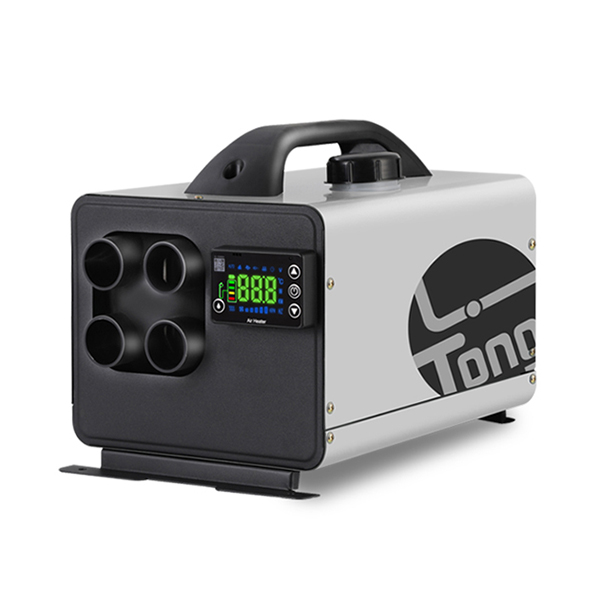
A parking heater is a small, independently fuelled heater that draws from the vehicle's fuel supply and electrical system, then delivers warm air or heated coolant to the cab or compartment. Calling it integrated means the burner, heat exchanger, fuel pump, control board and blower arrive as one assembly rather than as a box of parts to be assembled on the vehicle.
Self-contained burner and heat exchanger
Electric fuel pump metered by the control unit
Blower for air distribution or a coolant circuit for water heaters
Control panel, thermostat or timer interface
Integrated mounting frame suited to horizontal installation
The horizontal configuration matters for packaging. It allows the unit to be fitted under a bunk, inside a toolbox compartment or beneath a cab where vertical height is limited.
2. Why Idle Reduction Pays for the Heater
An idling engine is a very inefficient heater. Most of the fuel energy becomes waste heat rejected through the radiator and exhaust, while the engine accumulates service hours and the cab receives only a fraction of what is burned.
| Factor | Engine idling overnight | Parking heater |
|---|---|---|
| Fuel consumption | High, continuous | Low, metered |
| Engine hours | Accumulate, adding service cost | No engine hours added |
| Cab temperature | Adequate but poorly controlled | Thermostatically controlled |
| Noise | Continuous engine noise | Low-level fan noise |
| Anti-idling compliance | Often restricted | Generally permitted |
For fleets, the calculation is simple: compare litres burned per night against heater fuel use, then add the value of the engine hours avoided. Payback is typically measured in a single winter season for vehicles that regularly night out.
3. Fuel, Power and Installation Basics
Installation quality determines whether a heater is a pleasure or a problem. The mechanical work is modest, but each connection needs to be right.
Fuel supply — a dedicated pickup or tee from the vehicle tank, with the metered pump mounted near the tank where possible.
Electrical supply — adequate cable cross-section and fusing, because start-up draws significant current.
Air intake and combustion exhaust — routed separately to the outside, with the exhaust outlet clear of openings and vents.
Heat distribution — ducting or outlet positioned so warm air circulates rather than blowing directly on the occupant.
Mounting — horizontal, level, and isolated from vibration.
Combustion air must never be drawn from the heated space, and the exhaust must never terminate where fumes can re-enter the cab. These two rules are the core of safe installation.
4. Safety, Venting and Routine Checks
Any combustion device installed in or near an occupied space demands respect. Carbon monoxide has no smell, which is why a correctly routed exhaust and a working detector are not optional extras.
Route combustion exhaust to open air, away from vents and windows
Keep the exhaust line free of kinks, crushing and low spots that trap condensate
Fit and periodically test a carbon monoxide detector in the sleeping space
Inspect fuel lines and clamps for chafing at every service
Run the heater briefly in the off-season to keep the system exercised
5. Sizing the Unit to the Space
Heater output is quoted in kilowatts, and the required output follows from the volume to be heated, the insulation quality and the target temperature rise. An uninsulated metal box needs far more power than an insulated sleeper cab of the same size.
Small, well-insulated sleeper cabs — modest output is sufficient
Larger cabs or poorly insulated compartments — higher output, or a coolant-based system
High-altitude operation — derating may apply; confirm with the supplier
Multi-zone use (cab plus cargo) — separate circuits or a higher-output unit
Oversizing is tempting but has a downside: a heater that reaches setpoint too quickly cycles frequently, which is less comfortable and can promote carbon build-up. Match output to the space rather than simply buying the largest unit available.
Frequently Asked Questions
Does a parking heater drain the vehicle battery?
It draws current during start-up and operation, so the electrical supply must be correctly sized and fused. Vehicles that night out frequently often specify a larger battery bank or a separate supply for the heater circuit.
Can it run while driving?
Many units can operate while the vehicle is moving, but the exhaust routing and manufacturer instructions must be followed, and local regulations should be checked.
How much fuel does a night of heating use?
Far less than idling an engine for the same period — typically a fraction of a litre per hour at steady state, depending on output setting and insulation quality.
What maintenance does it need?
Periodic inspection of the exhaust, fuel lines and electrical connections, plus occasional running in the off-season to confirm reliable ignition and clean combustion.