

In the demanding world of trailer operation, suspension failure rarely happens without warning. A leaf spring gives notice through ride height, noise, tyre wear and a handful of visible signs that take minutes to check. Building those checks into a routine is the cheapest reliability measure available to any fleet or owner: it converts an unplanned roadside failure into a scheduled workshop job. This checklist sets out what to look for, how often to look, and the point at which replacement is safer and cheaper than repair.
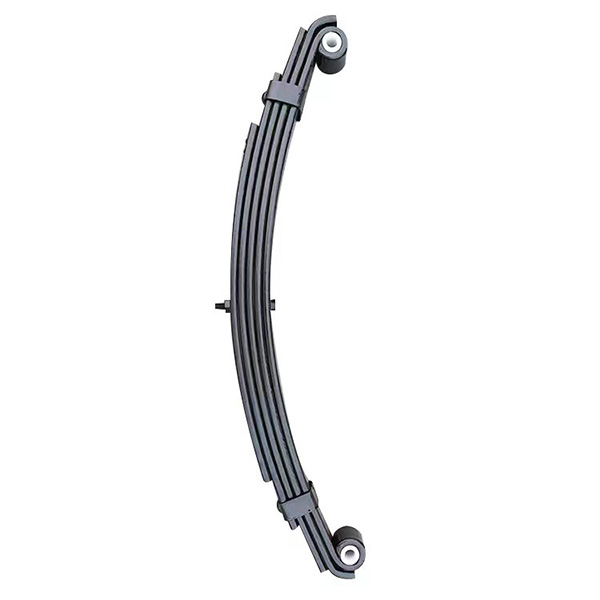
1. Setting a Realistic Inspection Interval
Interval should follow duty, not the calendar alone. A trailer that crosses rough ground weekly needs attention far more often than one that makes four paved trips a year.
Before each long trip — visual walk-around: ride height, obvious cracks, loose hardware
Monthly in regular service — visual inspection plus a check of U-bolt torque
Seasonally or every 10,000 km — full inspection including bushings, shackles and hangers
After any impact event — kerb strike, deep pothole or off-road recovery — inspect immediately
Record what is found. A slow change in ride height over successive inspections is the earliest and most reliable indicator that a pack is losing its set.
2. Six Warning Signs That Precede Failure
Each of the following is detectable without tools beyond a torch and a tape measure. Any one of them justifies a closer look; several together justify replacement.
Loss of arch or ride height — the spring has taken a permanent set.
Cracked or elongated eyes — inspect the main leaf eye, the classic fatigue site.
Fanned leaves or a shifted centre bolt — the pack has lost its clamping integrity.
Polished rub marks — leaves contacting the frame or each other abnormally.
Uneven tyre wear — usually indicates axle misalignment caused by worn bushings or a broken spring.
Clunks or squeaks over bumps — worn bushings, loose U-bolts or a seized pack.
3. Torque, Lubrication and Cleaning
Most suspension problems are mechanical rather than metallurgical: something came loose, or something stopped moving freely.
| Item | Action | Frequency |
|---|---|---|
| U-bolts | Check torque in a cross pattern | Monthly, and after the first loaded trip |
| Shackle bolts | Confirm free swing, no side play | Seasonally |
| Bushings | Inspect for cracking and extrusion | Seasonally |
| Spring surface | Rinse off salt and mud, inspect coating | After exposure |
Do not paint over a spring with a heavy, brittle coating. A hard film cracks with the flexing, traps moisture against the steel and accelerates the corrosion it was meant to prevent.
4. Repair or Replace? A Simple Decision Rule
Rebuilding a pack is sometimes viable, but the economics usually favour replacement once a main leaf is involved.
Replace if the main leaf is cracked, the eye is elongated, or the pack has lost its arch
Replace if corrosion pitting is visible between leaves
Repair is reasonable for a single broken auxiliary leaf on an otherwise sound pack
Always replace in axle pairs to keep ride height and handling symmetrical
Renew hardware with the spring — bushings, U-bolts and shackle bolts are inexpensive
The cost difference between repairing one pack and replacing a pair is small compared with the cost of a failed suspension on the road, particularly where the load is valuable or the route is remote.
5. Keeping a Spare Parts Kit
For fleets and remote operations, a small spares kit turns a multi-day delay into a same-day repair.
One complete replacement spring pack per axle rating in use
Matching U-bolt kit and spring pads
Bushing and sleeve set
Shackle bolts, nuts and a spare shackle
Centre bolts and, for strap winches, a replacement strap
Store spares dry and off the floor. A spring that has rusted in storage is not a spare — it is a future problem.
Frequently Asked Questions
How long should a leaf spring last?
Service life depends on load, road conditions and corrosion exposure rather than on age. A correctly rated, well-maintained pack can last for many years; an overloaded or corroded one may fail in a single season.
Can I replace just one leaf?
Only for an auxiliary leaf on an otherwise sound pack. A damaged main leaf, or a pack that has lost its arch, should be replaced complete.
Why does my trailer sit lower on one side?
Usually a tired spring, a worn bushing allowing the axle to shift, or a pack that has been replaced on one side only. Measure ride height on both sides to confirm.
Is greasing between the leaves recommended?
Modern packs are generally designed to run dry or with factory-applied interleaf treatment. Adding grease can attract grit, so follow the manufacturer's guidance for your spring type.