

Two leaf springs can look identical on the shelf yet deliver wildly different service lives. The difference is rarely visible — it lives in the leaf spring material, the heat treatment, and the manufacturing discipline behind it. For buyers and wholesalers, understanding these factors is the key to sourcing springs that survive real-world loads instead of failing on the first rough road.
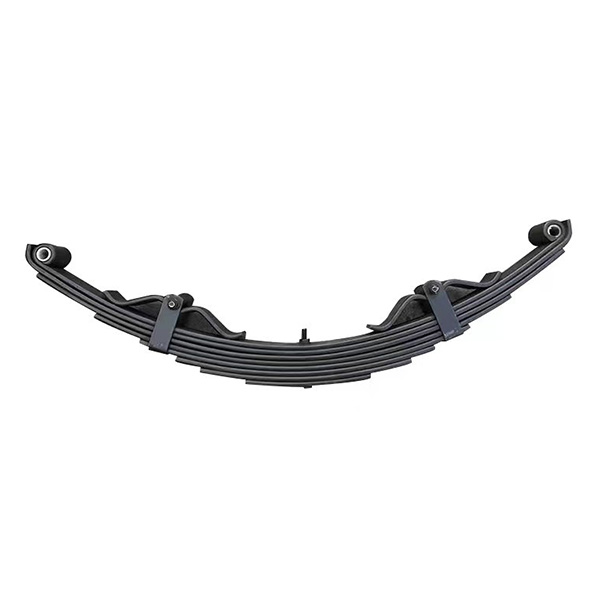
The Steel Behind Every Good Leaf Spring
A leaf spring lives or dies by its ability to bend millions of times without cracking. That demands a special class of high-carbon, high-silicon alloy steel engineered for fatigue resistance. The most common grades include:
| Grade | Region | Key traits |
|---|---|---|
| 60Si2Mn | China / Asia | High yield, excellent fatigue life, cost-effective |
| 51CrV4 (6150) | Europe / US | Chromium-vanadium, superior toughness |
| SUP9 / SUP11 | Japan | Silicon-manganese, balanced performance |
| SAE 5160 | North America | Widely used, good hardenability |
For most trailer and light-truck springs, 60Si2Mn offers the best blend of strength, fatigue life, and price, which is why it is the workhorse alloy across Asian suspension manufacturing.
"Steel grade is the foundation. You can have perfect manufacturing and still get a weak spring if the alloy can't handle the fatigue cycle. Start with the material." — Haoye Materials Engineer
Why Heat Treatment Matters More Than Thickness
Raw spring steel is soft. The performance comes from heat treatment — typically quenching and tempering — that creates a fine, uniform microstructure with high surface hardness and a tough core. A properly treated 8 mm leaf can outlast a poorly treated 10 mm leaf. Key steps:
Hardening (quench): Heated to austenitizing temperature, then rapidly cooled to form martensite.
Tempering: Reheated to a lower temperature to trade a little hardness for toughness and reduce internal stress.
Shot peening: Blasting the surface with steel shot induces compressive stress that dramatically improves fatigue life.
Surface finishing: Painting, oiling, or hot-dip galvanizing for corrosion protection.
"Shot peening is the quiet hero of leaf spring life. It can double fatigue resistance just by putting the surface in compression." — Haoye Process Engineer
Modern Leaf Spring Manufacturing Steps
A reputable leaf spring manufacturing line turns raw bar into a finished pack through tightly controlled stages:
Shearing & punching: Cutting leaves to length and punching the center hole and eyes.
Eye forming: Rolling or pressing the ends into precise eyes without cracking the grain.
Cambering: Pre-bending each leaf to its designed arch.
Heat treatment: Batch or continuous hardening and tempering.
Shot peening & inspection: Surface strengthening plus hardness and crack checks.
Assembly: Stacking leaves with center bolt, clips, and bushings.
Where CNC Precision Changes the Game
Traditional spring shops relied on manual presses; modern plants use CNC machining centers and laser cutting for repeatable accuracy. Tight tolerances on eye position, hole alignment, and leaf contour mean every pack in a batch performs identically — critical for fleet and OEM buyers who cannot tolerate variation.
"CNC consistency is what lets a fleet order 500 springs and trust that spring number 500 rides exactly like number one. That repeatability is the real value." — Haoye Production Manager
Signs of Poor Manufacturing to Avoid
When sourcing, watch for these red flags:
Inconsistent leaf thickness or rough sheared edges.
Cracked or off-center eyes from poor forming.
No hardness or fatigue test documentation.
Thin or uneven coating that rusts within a season.
Missing center bolt or loose clips in the pack.
Frequently Asked Questions
Is thicker always better for a leaf spring?
No. Thickness must be balanced with heat treatment and leaf count. An overtly thick, poorly treated leaf can be brittle and crack.
What does shot peening actually do?
It bombards the surface with tiny steel balls, creating compressive stress that resists the micro-cracks that cause fatigue failure.
Can different steel grades be mixed in one spring?
No. All leaves in a pack should share the same grade and treatment so they flex uniformly.
How important is the galvanizing temperature?
Very. Proper hot-dip galvanizing must not over-anneal the steel; controlled process protects both coating and strength.
Do I need certificates when buying wholesale?
Yes. Reputable suppliers provide material and hardness test reports, especially for OEM and export orders.
Why choose a factory-direct manufacturer?
Direct sourcing cuts middlemen, ensures process control, and lets you customize material and finish for your market.
Conclusion
A durable leaf spring is the product of the right alloy, disciplined heat treatment, and precise CNC manufacturing — not just a thick piece of steel. Specifying by material grade and process, not price alone, is how wholesalers and fleets avoid premature failures.
Source Leaf Springs Built to Last
Renqiu Haoye Motorcycle Parts Co., Ltd. manufactures leaf springs from certified 60Si2Mn spring steel with CNC precision, shot peening, and optional hot-dip galvanizing. We provide material and hardness documentation for OEM and wholesale orders. Visit Haoye Machinery to discuss your specification.