

In the demanding environment of marine and winter-road transport, corrosion — not overload — is the most common reason a leaf spring pack is retired early. A hot dip galvanized leaf spring addresses that failure mode at the metallurgical level, bonding a zinc layer to the steel so that scratches and stone chips are still protected long after the surface has been abused. By pairing a galvanised pack with the correct bushings and hardware, operators extend suspension service life and avoid the unplanned downtime that follows a seized or cracked spring. As environmental exposure standards and fleet uptime expectations tighten, corrosion-resistant suspension is becoming a specification baseline rather than a premium option.
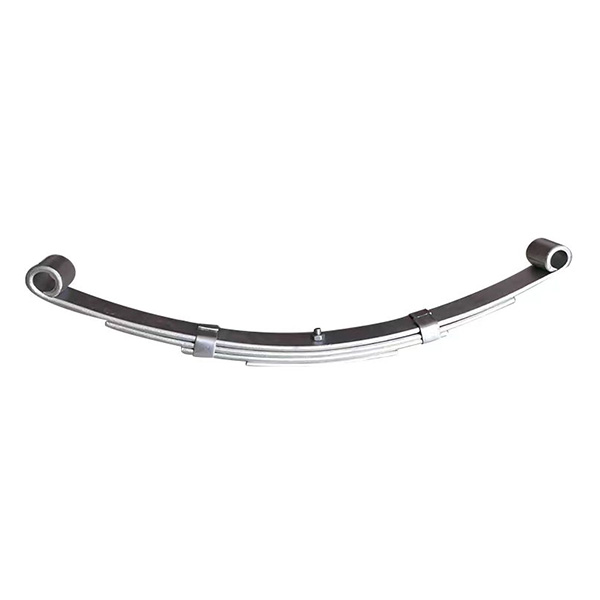
1. Why Corrosion, Not Load, Usually Ends a Spring's Life
A leaf spring works by flexing. Each leaf slides microscopically against its neighbour on every bump, which means any surface coating is being continuously abraded. Paint survives that abrasion poorly: once the film is breached at the leaf tips and edges, rust creeps between the leaves, the pack seizes, and the effective spring rate climbs sharply.
A seized pack rides harshly, transfers shock into the frame and cargo, and concentrates stress at the main leaf eye — the classic site of a fatigue crack. On a boat trailer, salt water accelerates the entire process, particularly in the splash zone around the axle.
Rust between leaves raises friction and stiffens the pack
Section loss from pitting reduces the steel's fatigue strength
Eyes and U-bolts seize, making routine service slow and expensive
Appearance suffers long before structural capacity is lost, hurting resale
2. What Hot-Dip Galvanizing Actually Does
In hot-dip galvanizing, the finished spring is immersed in molten zinc. The zinc reacts with the steel to form a series of iron-zinc alloy layers topped with relatively pure zinc. Because the coating is metallurgically bonded rather than simply stuck on the surface, it behaves very differently from paint under damage.
The practical consequence is cathodic protection: where the coating is scratched, the surrounding zinc corrodes preferentially and shields the exposed steel. A stone chip on a galvanised spring becomes a small dull spot, not a rust bloom that spreads under the film.
Metallurgical bond — no peeling or flaking like a surface film
Sacrificial protection at scratches, cut edges and bolt holes
Full coverage including leaf edges, eyes and the centre-bolt area
Consistent coating thickness controlled by bath time and drainage
3. Galvanized vs Painted: Service Life and Total Cost
Painted springs are cheaper on the invoice and perfectly adequate for a trailer that lives under cover on dry roads. The comparison changes once the equipment is stored outdoors, launched into water, or driven on roads treated with de-icing salt.
| Service condition | Painted pack | Hot-dip galvanized pack |
|---|---|---|
| Dry, covered storage | Good life, lowest cost | Long life, higher initial cost |
| Boat / saltwater launching | Rapid rust at leaf edges | Designed for this exposure |
| Winter road salt | Frequent cleaning required | Salt-tolerant, low maintenance |
| Coastal / high humidity | Short repaint cycle | Minimal intervention |
When the cost of a replacement pack, the labour to fit it and the cost of a trailer out of service are added together, the galvanised option is usually the cheaper decision over the life of the equipment — particularly for rental fleets and commercial operators.
4. Where Galvanized Springs Are Specified
Certain applications have converged on galvanised suspension as standard practice. If your equipment appears in this list, the upgrade is rarely discretionary.
Boat and personal watercraft trailers — repeated immersion in salt or brackish water.
Winter service trailers — sustained exposure to road salt and brine.
Coastal and island logistics — salt-laden air even without immersion.
Agricultural and sanitation equipment — washdowns, slurry and fertiliser contact.
Rental fleets — where appearance and uptime both drive revenue.
5. Care, Inspection and Compatibility
Galvanizing reduces maintenance; it does not eliminate it. A short rinse after saltwater use removes deposits that would otherwise dry on the surface, and periodic inspection still matters.
Rinse with fresh water after launching or salt-road use
Inspect eyes, U-bolts and centre bolt at each service interval
Pair galvanised springs with galvanised or stainless hardware to avoid galvanic couples
Avoid aggressive scraping or wire-brushing that removes the zinc layer
Where a trailer is used only occasionally, the choice is simpler still: a corrosion resistant leaf spring tolerates long periods of standing outdoors, so the equipment is ready to work whenever it is needed.
Frequently Asked Questions
Does galvanizing make the spring brittle?
No. Hydrogen embrittlement is a known consideration in high-strength steel processing, which is why galvanizing must be performed under a controlled procedure with proper surface preparation and, where required, stress-relief practice appropriate to the steel grade.
Can I galvanize a spring that is already rusted?
The coating bonds to clean steel. Heavily pitted or cracked springs should be replaced rather than coated, because corrosion damage has already reduced the fatigue strength of the leaves.
Will a galvanized spring fit my existing hangers?
Yes. Galvanizing is a finish, not a geometry change. Dimensions, eye diameter and bushing type remain identical to the equivalent painted spring.
Are hot-dip galvanized springs worth it for a trailer used twice a year?
For seasonal or intermittent use they are often the better value, because the finish tolerates long outdoor storage without deteriorating between trips.