

Buying a double eye leaf spring looks straightforward until two quotations arrive with the same headline size and very different scope. This guide works through what to verify before the order is placed: the grade, the dimensions that actually govern fit, the documents that should arrive with the part, and the checks that catch a mismatch at goods-in rather than on the assembly floor.
Where the specification usually goes wrong
One useful habit is to walk the assembly before it is closed up and look for anything that will be inaccessible later. A double eye leaf spring positioned behind a panel or under a cover may be technically correct yet impossible to inspect, and that inaccessibility becomes a maintenance liability for the life of the vehicle.
The failure mode worth designing against is fatigue cracking around the centre bolt hole. It rarely appears suddenly; there is usually a period of gradual change in appearance or behaviour. Capturing that change during routine inspection is what turns an unplanned stoppage into a scheduled repair.
Reading a quotation line by line
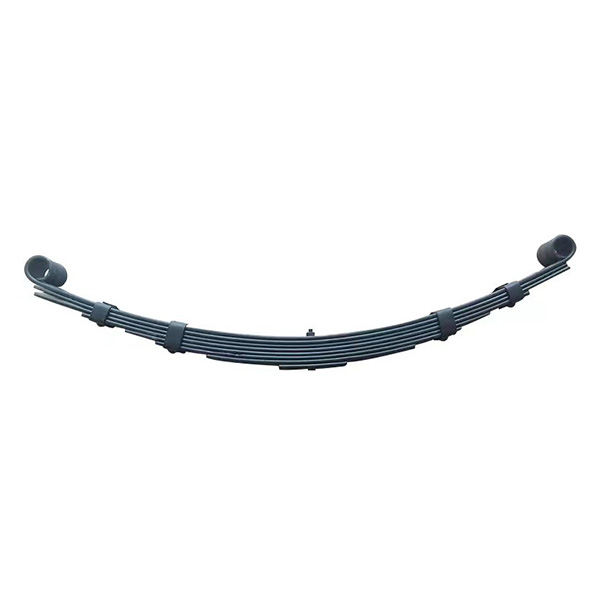
The reason engineers return to the double eye leaf spring is simple: it solves a recurring load and geometry problem in a vehicle assembly with a part that can be manufactured repeatably, inspected easily and replaced without disturbing the rest of the structure. That combination is hard to beat on a busy build.
Proof-load testing is a useful confirmation, not a substitute for good workmanship. An assembly that passes a proof load test can still be poorly aligned or over-stressed, so the test should close out a controlled process rather than compensate for a rushed one.
What the quote will not spell out
In utility trailers and light commercial suspension, the double eye leaf spring usually sees a mix of steady load and short transients. Designing only for the steady case is a common shortcut; the transient case is what decides whether the assembly stays tight after a season of operation or begins to loosen.
Grades and finishes worth asking about
| Aspect | What to check | Why it matters |
|---|---|---|
| Material | silicon-manganese spring steel or chromium-vanadium alloy spring steel matched to the duty | Compatibility and corrosion allowance |
| Dimensions | leaf width, leaf thickness, pack length and eye bore | Determines fit-up without forcing the joint |
| Interface | Contact faces and bores as specified | Controls load transfer |
| Marking | Grade, size, heat number and maker | Traceability from goods-in |
| Inspection | eye bore, free camber and leaf alignment | Catches fit-up problems before they are buried |
| Documentation | Certificate, dimensional record, test report | Supports later maintenance |
A double eye leaf spring is one of those components that rarely attracts attention while everything is running, yet it becomes the first thing anyone questions when an assembly starts to wear, sag or fail inspection. Getting the specification right at the ordering stage is almost always cheaper than correcting it during commissioning.
- silicon-manganese spring steel — The general-purpose choice; verify grade and traceability on the certificate.
- Documentation — Certificate, dimensional record and inspection report travel together.
- leaf width, leaf thickness, pack length and eye bore — State each value explicitly; ambiguity here is the most common source of a re-order.
- eye bore, free camber and leaf alignment — A practical acceptance check at goods-in and again after fit-up.
- the dimensional conventions used for leaf spring packs — Sets the dimensional envelope; confirm conformity on received parts.
Leaf width, leaf thickness, pack length and eye bore in plain language
Quality control is cheapest at the point of receipt. Checking a delivery for correct marking, dimensional conformity, surface condition and certificate coverage takes very little time and prevents nonconforming leaf spring packs from ever reaching the assembly area, where they are much harder to identify.
Documentation worth insisting on
Training the installation crew on the specific detail is more effective than issuing a generic procedure. When the fitter understands why eye bore, free camber and leaf alignment matters, the check becomes part of the work rather than a box to be ticked afterwards, and the resulting consistency shows up clearly in inspection records.
- the dimensional conventions used for leaf spring packs — Sets the dimensional envelope; confirm conformity on received parts.
- chromium-vanadium alloy spring steel — Selected where corrosion, weight or temperature rules out the default.
- silicon-manganese spring steel — The general-purpose choice; verify grade and traceability on the certificate.
- leaf width, leaf thickness, pack length and eye bore — State each value explicitly; ambiguity here is the most common source of a re-order.
- Documentation — Certificate, dimensional record and inspection report travel together.
Questions to put to the supplier
| Cost element | Where it appears | How to control it |
|---|---|---|
| Purchase price | The quotation | Compare identical scope only |
| Fit-up hours | The workshop | Specify leaf width, leaf thickness, pack length and eye bore unambiguously |
| Rework | After inspection | Check eye bore, free camber and leaf alignment before assembly starts |
| Downtime | During service | Choose a rating with a sensible margin |
| Spares holding | The stores | Standardise on a small family of leaf spring packs |
| Replacement | End of service life | Keep the record with the build |
Most specification mistakes are not dramatic. They come from assuming that a double eye leaf spring rated for one duty will quietly cover a neighbouring application as well. In practice, a small change in leaf width, leaf thickness, pack length and eye bore can move the part outside its intended window, and the resulting rework is far more expensive than the original saving.
A note on certificates
Joint preparation deserves the same attention as the final torque. Clean contact faces, consistent clearance and correctly specified fasteners do more for long-term integrity than any cosmetic finishing afterwards. On alloy material, controlling assembly torque and sequence is what protects the properties the grade was chosen for.
Goods-in checks that pay for themselves
- ✓ Grade and heat number confirmed against the certificate
- ✓ leaf width, leaf thickness, pack length and eye bore matches the approved duty specification
- ✓ eye bore, free camber and leaf alignment checked before parts reach the assembly area
- ✓ Contact faces protected and free of debris
- ✓ Mounting interface matches the order
- ✓ Inspection records filed against the build number