

Signs of coating damage at the leaf contact points usually appear gradually, and the temptation is to replace the part and move on. That rarely removes the cause. This walkthrough starts with the symptom, works through the short list of likely causes in a sensible order, and ends with a repair that can be verified rather than merely hoped for.
Reading the symptom before replacing anything
Procurement teams often focus on unit price, but total cost tells a different story. A galvanised leaf spring that arrives with complete documentation, consistent dimensions and reliable lead time reduces fit-up hours, rework and inspection queries, and those savings usually dwarf a small difference in the quoted price.
Most specification mistakes are not dramatic. They come from assuming that a galvanised leaf spring rated for one duty will quietly cover a neighbouring application as well. In practice, a small change in coating thickness, leaf width and pack length can move the part outside its intended window, and the resulting rework is far more expensive than the original saving.
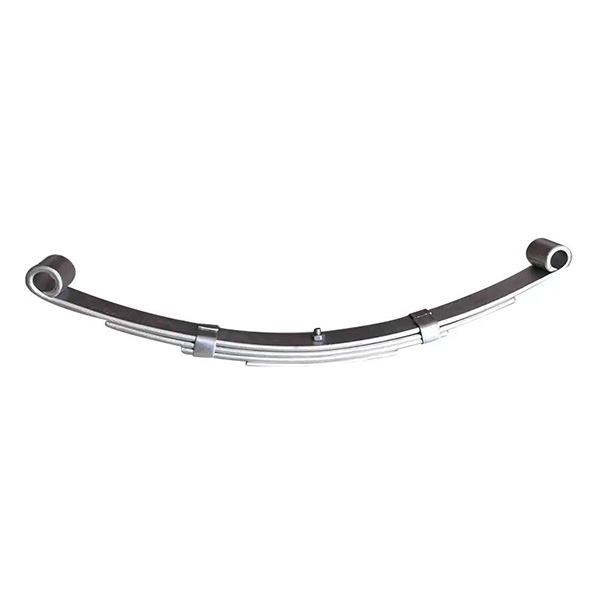
The short list of likely causes
Joint preparation deserves the same attention as the final torque. Clean contact faces, consistent clearance and correctly specified fasteners do more for long-term integrity than any cosmetic finishing afterwards. On alloy material, controlling assembly torque and sequence is what protects the properties the grade was chosen for. That is why coating coverage, eye bore and free camber belongs in the goods-in checklist, not only in the final inspection record.
Proof-load testing is a useful confirmation, not a substitute for good workmanship. An assembly that passes a proof load test can still be poorly aligned or over-stressed, so the test should close out a controlled process rather than compensate for a rushed one. That is why coating coverage, eye bore and free camber belongs in the goods-in checklist, not only in the final inspection record.
Ruling causes out in order
- Access — Leave room for tools, gauges and a future inspection.
- Observation — Record coating coverage, eye bore and free camber so a developing trend is visible.
- Records — Keep the outcome with the build number for the next engineer.
- Restraints — Place mounting points deliberately, not wherever a bracket fits.
- Environment — Consider drainage, coating and isolation from dissimilar metals.
Finally, it is worth remembering that the galvanised leaf spring is a small part of a much larger system whose behaviour is governed by load, speed, movement and the quality of workmanship. Treating those factors together, rather than in isolation, is the practical route to an assembly that stays sound for years.
First checks
In marine trailers and winter-service equipment, the galvanised leaf spring usually sees a mix of steady load and short transients. Designing only for the steady case is a common shortcut; the transient case is what decides whether the assembly stays tight after a season of operation or begins to loosen.
What the workshop record can tell you
| Symptom | Likely cause | First check |
|---|---|---|
| Early wear at the interface | Fit forced during assembly | Re-measure coating coverage, eye bore and free camber |
| Loosening under load | Restraint placed where it attracts force | Review mounting layout |
| Surface damage on receipt | Handling or storage | Check protective packing |
| Unusual noise in service | Vibration not captured by static design | Check support spacing |
| Repeat failure after replacement | Cause not removed | Re-read the assembly record |
| Corrosion beneath covers | Trapped moisture | Inspect drainage and coating |
Material selection starts with the load case and the environment rather than with price. hot dip galvanised spring steel remains the default for many general applications, while zinc-rich painted spring steel earns its place where corrosion, weight or temperature rules the first option out. Compatibility with the mating component matters as much as the properties of the part itself.
Fixes that hold and fixes that do not
There is a persistent temptation to treat the galvanised leaf spring as a commodity. In reality, small differences in forming method, heat treatment and dimensional control produce very different behaviour under sustained load, and those differences are invisible until the part has been in service for some time.
- ✓ coating coverage, eye bore and free camber recorded with the same method as the previous visit
- ✓ No change in appearance, play or alignment since the last check
- ✓ Hidden areas under panels included in the walk-around
- ✓ Restraints and mounting points inspected for loosening
- ✓ Coating and drainage still effective
- ✓ Result logged against the assembly record
Frequently Asked Questions
The two arrangements most often compared are the hot dip galvanised finish and the zinc-rich painted finish. Both are legitimate, but they solve slightly different problems: one favours a smoother load transfer or a gentler transition, while the other saves space or simplifies fit-up in a crowded area. Choosing between them should follow the layout, not habit.
When assessing an existing installation, start by establishing what is actually fitted rather than what the drawing says. Assemblies are modified over time, and a galvanised leaf spring that was correct for the original duty may be working well outside its intended conditions after a later change of use.
A note on false positives
Before comparing catalogues, it helps to be clear about what the galvanised leaf spring has to achieve in service. the zinc layer, the leaf stack, the centre bolt and the eye bushes all carry load in a different way, and a choice that looks acceptable on a drawing may behave very differently once load, speed and vibration are applied together.
Confirming the repair
- Observation — Record coating coverage, eye bore and free camber so a developing trend is visible.
- Access — Leave room for tools, gauges and a future inspection.
- Records — Keep the outcome with the build number for the next engineer.
- Restraints — Place mounting points deliberately, not wherever a bracket fits.
- Environment — Consider drainage, coating and isolation from dissimilar metals.
Vibration is another quiet contributor to premature failure. Assemblies connected to rotating equipment carry a continuous low-amplitude load that a static design check will not capture. Adequate support spacing and a sensible clamp detail are usually enough to keep it under control. That is why coating coverage, eye bore and free camber belongs in the goods-in checklist, not only in the final inspection record.