

Standards such as the fitment conventions used for spring shackles set a useful boundary, but they are not a complete specification. This article separates what the standard genuinely settles — dimensions, marking and conformity — from the decisions that still belong to the specifier, and shows how to turn a clause into an unambiguous purchase order.
Scope of the standard
Before comparing catalogues, it helps to be clear about what the leaf spring connector has to achieve in service. the two side plates, the bolts, the bushes and the spring eye all carry load in a different way, and a choice that looks acceptable on a drawing may behave very differently once load, speed and vibration are applied together.
Standardising on a limited set of sizes and grades across a fleet reduces spares holdings and simplifies maintenance. There is a real operational advantage when the store, the workshop and the inspection team are all working with the same small family of shackle and connector assemblies.
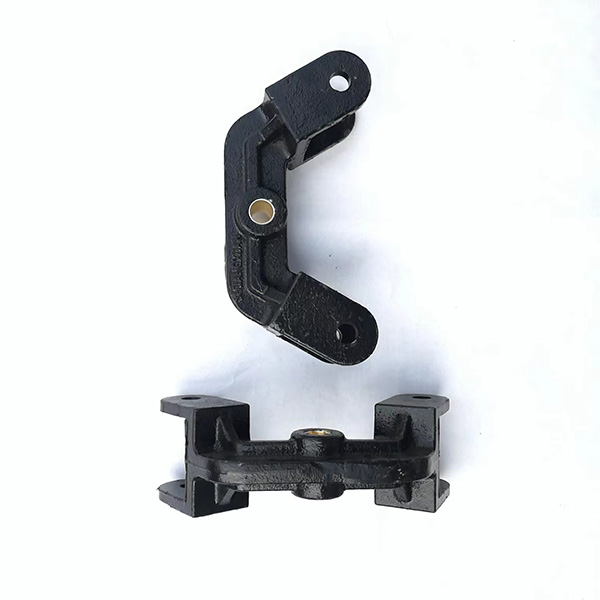
Where the dimensional envelope stops
| Dimension | Why it governs fit | Record to keep |
|---|---|---|
| bolt diameter, plate spacing and eye bore | Sets the window in which the part behaves as intended | Dimensional check sheet |
| bush condition, bolt torque and plate parallelism | Decides whether parts meet without force | Pre-assembly verification |
| Interface geometry | Controls load transfer into the two side plates, the bolts, the bushes and the spring eye | Drawing revision |
| Clearance | Leaves room for tools and gauges | Fit-up photograph or sketch |
| Marking | Links the physical part to its certificate | Goods-in register |
| As-built position | Baseline for later modification | Assembly record |
Quality control is cheapest at the point of receipt. Checking a delivery for correct marking, dimensional conformity, surface condition and certificate coverage takes very little time and prevents nonconforming shackle and connector assemblies from ever reaching the assembly area, where they are much harder to identify.
Most specification mistakes are not dramatic. They come from assuming that a leaf spring connector rated for one duty will quietly cover a neighbouring application as well. In practice, a small change in bolt diameter, plate spacing and eye bore can move the part outside its intended window, and the resulting rework is far more expensive than the original saving.
A note on bush condition, bolt torque and plate parallelism
The most reliable installations tend to be the unremarkable ones: a correctly specified leaf spring connector, fitted without force, assembled under a controlled procedure, inspected against a clear plan, and recorded accurately. There is no shortcut in that list, and no single product that replaces any step in it.
Tolerances in practice
- bush condition, bolt torque and plate parallelism — A practical acceptance check at goods-in and again after fit-up.
- Documentation — Certificate, dimensional record and inspection report travel together.
- the fitment conventions used for spring shackles — Sets the dimensional envelope; confirm conformity on received parts.
- galvanised forged steel — Selected where corrosion, weight or temperature rules out the default.
- bolt diameter, plate spacing and eye bore — State each value explicitly; ambiguity here is the most common source of a re-order.
Comparing offers from different suppliers is only meaningful when the scope is identical. Confirm the grade, the dimensional standard, the interface geometry, the inspection level and the documentation package before comparing numbers, otherwise the lowest price may simply be the least complete scope.
Marking, certification and traceability
Cleanliness is easy to overlook on plain steel but critical on finished surfaces. Protecting the contact faces, keeping the bore free of debris, and capping open ends during assembly are simple habits that prevent damage which is otherwise discovered only at final fitting or commissioning. With a leaf spring connector, the practical consequence is an assembly that stays verifiable for its whole service life.
What the specifier still has to decide
The two arrangements most often compared are the fixed shackle plate and the equaliser link. Both are legitimate, but they solve slightly different problems: one favours a smoother load transfer or a gentler transition, while the other saves space or simplifies fit-up in a crowded area. Choosing between them should follow the layout, not habit.
One useful habit is to walk the assembly before it is closed up and look for anything that will be inaccessible later. A leaf spring connector positioned behind a panel or under a cover may be technically correct yet impossible to inspect, and that inaccessibility becomes a maintenance liability for the life of the vehicle.
What the certificate proves
Mounting points and restraints should be reviewed together with the leaf spring connector, not after it. A well-chosen component can be let down by a clamp that is too rigid, a guide that is missing, or a restraint placed where it attracts load the assembly was never designed to carry.
Turning the clause into a purchase order
- bush condition, bolt torque and plate parallelism — A practical acceptance check at goods-in and again after fit-up.
- the fitment conventions used for spring shackles — Sets the dimensional envelope; confirm conformity on received parts.
- galvanised forged steel — Selected where corrosion, weight or temperature rules out the default.
- Documentation — Certificate, dimensional record and inspection report travel together.
- bolt diameter, plate spacing and eye bore — State each value explicitly; ambiguity here is the most common source of a re-order.
Inspection should be planned rather than improvised. Visual examination catches most fit-up problems, and appropriate non-destructive testing confirms what cannot be seen. Documenting the results alongside the assembly record makes future maintenance and any modification far easier to justify.
Frequent misreadings
- ✓ Material certificate with batch traceability on file
- ✓ Dimensional check sheet attached to the build number
- ✓ Inspection and test reports signed off
- ✓ Any field deviation recorded with its reason
- ✓ Drawing revision identified unambiguously
- ✓ Handover copy passed to the maintenance team
Procurement teams often focus on unit price, but total cost tells a different story. A leaf spring connector that arrives with complete documentation, consistent dimensions and reliable lead time reduces fit-up hours, rework and inspection queries, and those savings usually dwarf a small difference in the quoted price.