

The off-road leaf spring is only as good as the way it is fitted. This is a workshop sequence: what to prepare, what to check before anything is tightened, the order of assembly, the inspection points before sign-off, and the records that make the next service visit straightforward.
Tools and preparation
Corrosion protection is easiest to specify and hardest to retrofit. Coatings, compatible isolation from dissimilar metals, and drainage that avoids trapped moisture all extend life. On enclosed assemblies, the risk often hides beneath cover panels, so inspection planning should include the areas that are not visible on a routine walk-around.
Sizing is mostly a matter of balance. A generous free camber, pack length and available axle travel gives margin and a longer service life but adds weight, cost and layout space; a tight selection saves all three and leaves very little room for field variation. The right answer depends on how well the actual operating conditions are known.
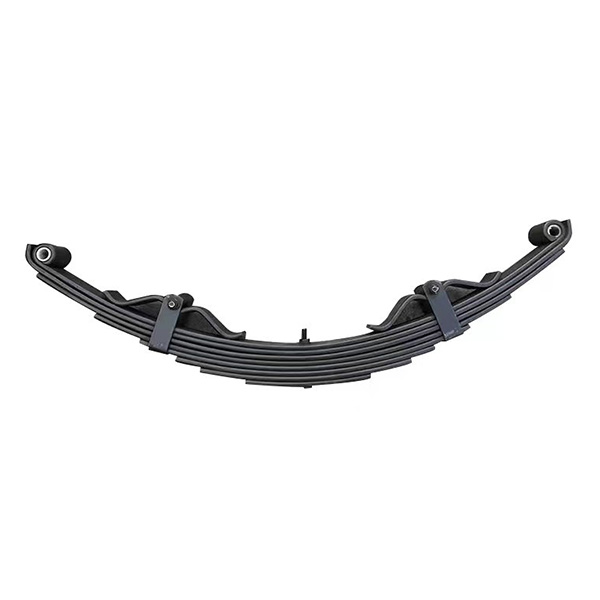
Checking the parts before work starts
Mounting points and restraints should be reviewed together with the off-road leaf spring, not after it. A well-chosen component can be let down by a clamp that is too rigid, a guide that is missing, or a restraint placed where it attracts load the assembly was never designed to carry.
- Environment — Consider drainage, coating and isolation from dissimilar metals.
- Observation — Record rebound clip tension, bush wear and loaded camber so a developing trend is visible.
- Alignment — Never pull an off-road leaf spring into position with a lever or a press.
- Restraints — Place mounting points deliberately, not wherever a bracket fits.
- Records — Keep the outcome with the build number for the next engineer.
The off-road leaf spring does not work in isolation. Its performance depends on the structure it joins, the mountings around it, the way the assembly moves under load, and the skill of the person fitting it. Reviewing the whole assembly, rather than the single component, is what separates a robust detail from a marginal one.
The assembly sequence, step by step
The two arrangements most often compared are the long-travel multi-leaf pack and the stiff heavy-duty pack. Both are legitimate, but they solve slightly different problems: one favours a smoother load transfer or a gentler transition, while the other saves space or simplifies fit-up in a crowded area. Choosing between them should follow the layout, not habit.
Before the first bolt
Where the operating data is uncertain, a modest margin is cheap insurance. Unexpected load, a future accessory or a change in duty cycle can all push a minimally sized off-road leaf spring beyond its comfortable range, and retrofitting capacity into a vehicle already in service is rarely straightforward.
Torque, clearance and alignment
- ✓ Tools and gauges available before work starts
- ✓ Parts dry-fit without force
- ✓ Fasteners and torque sequence match the approved method
- ✓ Clearance left for inspection access
- ✓ Visual and required examination completed
- ✓ Sign-off recorded before the assembly is closed up
Quality control is cheapest at the point of receipt. Checking a delivery for correct marking, dimensional conformity, surface condition and certificate coverage takes very little time and prevents nonconforming long-travel spring packs from ever reaching the assembly area, where they are much harder to identify.
Inspection points before sign-off
| When | What to record | Acceptance signal |
|---|---|---|
| At goods-in | Marking, grade and free camber, pack length and available axle travel | Certificate and part agree |
| Before assembly | rebound clip tension, bush wear and loaded camber | No force needed to bring parts together |
| During fit-up | Clearance, alignment and fastener condition | Sequence matches the approved method |
| At sign-off | Visual result and required examination | Record filed against the build |
| First service | Change in appearance or play | No developing trend |
| Routine checks | Repeat reading of rebound clip tension, bush wear and loaded camber | Stable over successive visits |
Finally, it is worth remembering that the off-road leaf spring is a small part of a much larger system whose behaviour is governed by load, speed, movement and the quality of workmanship. Treating those factors together, rather than in isolation, is the practical route to an assembly that stays sound for years.
Common shortcuts worth avoiding
There is a persistent temptation to treat the off-road leaf spring as a commodity. In reality, small differences in forming method, heat treatment and dimensional control produce very different behaviour under sustained load, and those differences are invisible until the part has been in service for some time.
- Observation — Record rebound clip tension, bush wear and loaded camber so a developing trend is visible.
- Environment — Consider drainage, coating and isolation from dissimilar metals.
- Alignment — Never pull an off-road leaf spring into position with a lever or a press.
- Restraints — Place mounting points deliberately, not wherever a bracket fits.
- Access — Leave room for tools, gauges and a future inspection.
For off-road caravans and all-terrain trailers, a conservative selection with clear documentation tends to outperform a clever minimum-weight design. Fleet operators value a part that can be understood, inspected and replaced with the tools and skills already available in the workshop, especially during a short service window.
Checking rebound clip tension, bush wear and loaded camber
Field conditions rarely match the drawing exactly. Allowing a reasonable adjustment margin, keeping a small stock of the relevant long-travel spring packs, and agreeing a clear change route before work starts all help a project absorb the unexpected without compromising the specification.