

Few suspension debates stir stronger opinions than leaf spring vs coil spring. Enthusiasts praise coils for ride comfort; fleet managers swear by leaves for load. The truth is that neither is universally "better" — each wins in the conditions it was designed for. This comparison helps you pick the right suspension type for your trailer or truck instead of following fashion.
How Each Spring Works
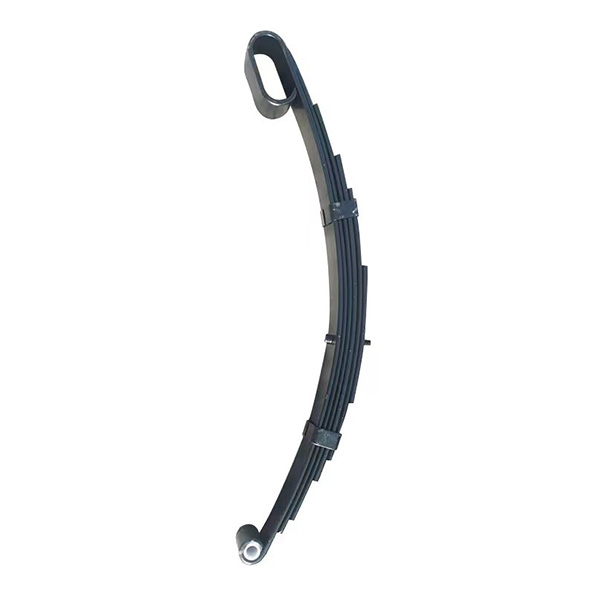
A leaf spring is a stack of curved steel strips that flexes and flattens under load, supporting weight while locating the axle. A coil spring is a helical steel coil that compresses vertically, usually paired with separate control arms that locate the axle. The structural difference is fundamental: leaves do suspension and location; coils need help with location.
"A leaf spring is a system in one part; a coil spring is half a system and needs arms, links, and bushings to do the same job. That's the real difference." — Haoye Suspension Engineering Team
Head-to-Head Comparison
| Factor | Leaf Spring | Coil Spring |
|---|---|---|
| Load capacity | Excellent, scales with leaves | Good, but bulkier for high load |
| Ride comfort | Firm, improves with tuning | Softer, more refined |
| Cost | Low | Higher (more parts) |
| Repairability | Replace single leaf | Replace whole coil |
| Axle location | Built-in | Needs control arms |
| Corrosion risk | Inter-leaf rust | Coil surface rust |
| Best for | Trailers, trucks, fleets | Cars, SUVs, comfort |
Where Leaf Springs Win
For trailers, light trucks, and any application where payload, repairability, and cost dominate, leaf spring benefits are decisive:
Simple, cheap, and easy to service at the roadside.
High capacity without complex subframes.
Built-in axle location reduces part count.
Individual leaves are replaceable, not the whole unit.
"On a trailer, every extra part is a part that can fail on a lonely highway. Leaves keep the parts count down, and that's why fleets love them." — Haoye Field Service Note
Where Coil Springs Win
For passenger cars and SUVs where ride quality and packaging matter, coils excel: they isolate bumps better, weigh less per unit of travel, and pair naturally with independent suspension. But they demand more supporting hardware and are costlier to repair.
Can You Convert a Trailer From Leaf to Coil?
Technically possible, but rarely worth it. A coil conversion needs welded brackets, control arms, and a redesigned axle — significant cost and certification effort for marginal comfort gains on a load-focused trailer. Sticking with leaves (or upgrading to a better leaf spec) is usually smarter.
Hybrid Options Worth Knowing
Some modern trailers use torsion axles (rubber cords) instead of either metal spring. They're smooth and maintenance-light but harder to repair and less scalable for heavy loads. For most haulers, a well-specified leaf remains the pragmatic choice.
"Torsion is great until it isn't — when the rubber ages there's no 'replace one leaf.' Leaves give you that graceful, cheap failure path." — Haoye Product Specialist
Frequently Asked Questions
Which is better for a heavy cargo trailer?
Leaf springs. They scale capacity simply and are cheaper to maintain under constant heavy load.
Are coil springs more comfortable?
Generally yes for passenger vehicles, but a correctly spec'd leaf trailer rides acceptably and far better than an overloaded one.
Why do most trailers use leaves?
Because they are cheap, strong, repairable, and locate the axle — ideal for load-carrying rigs.
Is leaf spring maintenance harder?
No. Lubricating between leaves and checking eyes is simpler than diagnosing coil and arm wear.
Can I mix leaf and coil on one vehicle?
Some utes do (leaves rear, coils front), but a trailer axle should use one consistent type.
What about air suspension?
Air rides beautifully and adjusts load, but costs far more and adds compressors and bags to maintain.
Conclusion
In the leaf spring vs coil spring debate, the winner depends on the job: leaves for load, cost, and repairability; coils for comfort and car-like refinement. For trailers and work rigs, the leaf spring's simplicity and strength keep it the rational, economical choice.
Specify the Right Suspension for Your Rig
Renqiu Haoye Motorcycle Parts Co., Ltd. specializes in leaf spring solutions for trailers, trucks, and OEM applications, with standard and custom builds and galvanized options. Visit Haoye Machinery to compare specs and request a quote tailored to your load.