

A maintenance routine built only around a calendar tends to miss the slow changes that actually precede failure. This article describes an inspection rhythm for auxiliary heater assemblies: what to observe, what to measure, how to read the trend, and how to decide when a replacement belongs in the plan.
Building the rhythm around observation
Cleanliness is easy to overlook on plain steel but critical on finished surfaces. Protecting the contact faces, keeping the bore free of debris, and capping open ends during assembly are simple habits that prevent damage which is otherwise discovered only at final fitting or commissioning. With a parking heater, the practical consequence is an assembly that stays verifiable for its whole service life.
Finally, it is worth remembering that the parking heater is a small part of a much larger system whose behaviour is governed by load, speed, movement and the quality of workmanship. Treating those factors together, rather than in isolation, is the practical route to an assembly that stays sound for years.
Where the operating data is uncertain, a modest margin is cheap insurance. Unexpected load, a future accessory or a change in duty cycle can all push a minimally sized parking heater beyond its comfortable range, and retrofitting capacity into a vehicle already in service is rarely straightforward.
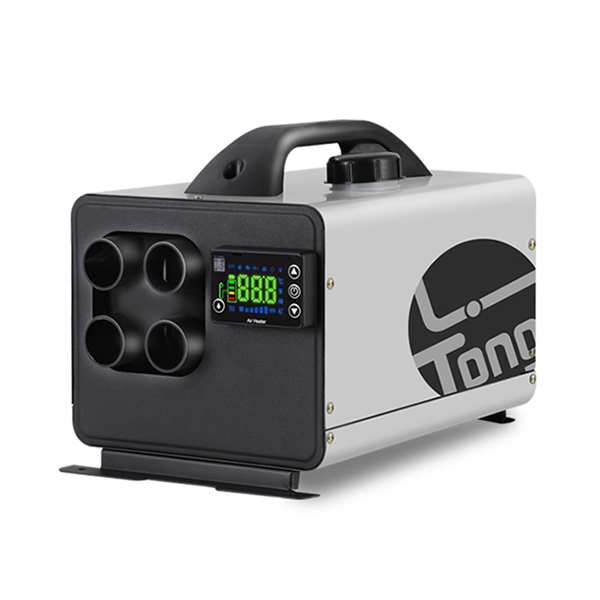
What to look at on a walk-around
When an assembly is modified years later, the quality of the original records decides how easy the work will be. Keeping the certificate, the dimensional check and the assembly record attached to the build number turns a future upgrade from an investigation into a routine task.
| When | What to record | Acceptance signal |
|---|---|---|
| At goods-in | Marking, grade and heat output, duct diameter and fuel supply | Certificate and part agree |
| Before assembly | exhaust routing, fuel line integrity and duct seals | No force needed to bring parts together |
| During fit-up | Clearance, alignment and fastener condition | Sequence matches the approved method |
| At sign-off | Visual result and required examination | Record filed against the build |
| First service | Change in appearance or play | No developing trend |
| Routine checks | Repeat reading of exhaust routing, fuel line integrity and duct seals | Stable over successive visits |
There is a persistent temptation to treat the parking heater as a commodity. In reality, small differences in forming method, heat treatment and dimensional control produce very different behaviour under sustained load, and those differences are invisible until the part has been in service for some time.
Measurements worth recording
- Alignment — Never pull a parking heater into position with a lever or a press.
- Environment — Consider drainage, coating and isolation from dissimilar metals.
- Access — Leave room for tools, gauges and a future inspection.
- Restraints — Place mounting points deliberately, not wherever a bracket fits.
- Records — Keep the outcome with the build number for the next engineer.
Documentation closes the loop. A short record of the grade, dimensions, inspection results and any field deviation gives the next engineer a reliable starting point, and that continuity is one of the most underrated contributors to a fleet that runs predictably.
Between services
A common question is whether aluminium heat exchanger can replace stainless steel combustion chamber to save cost. The answer depends on the load case, the environment and the corrosion allowance, and it should be resolved against the duty specification rather than by comparing material prices in isolation.
Setting intervals from condition
- ✓ exhaust routing, fuel line integrity and duct seals recorded with the same method as the previous visit
- ✓ No change in appearance, play or alignment since the last check
- ✓ Hidden areas under panels included in the walk-around
- ✓ Restraints and mounting points inspected for loosening
- ✓ Coating and drainage still effective
- ✓ Result logged against the assembly record
Quality control is cheapest at the point of receipt. Checking a delivery for correct marking, dimensional conformity, surface condition and certificate coverage takes very little time and prevents nonconforming auxiliary heater assemblies from ever reaching the assembly area, where they are much harder to identify.
Reading the trend rather than the snapshot
The failure mode worth designing against is carbon build-up from repeated short run cycles. It rarely appears suddenly; there is usually a period of gradual change in appearance or behaviour. Capturing that change during routine inspection is what turns an unplanned stoppage into a scheduled repair.
Standardising on a limited set of sizes and grades across a fleet reduces spares holdings and simplifies maintenance. There is a real operational advantage when the store, the workshop and the inspection team are all working with the same small family of auxiliary heater assemblies.
When to plan a replacement
Corrosion protection is easiest to specify and hardest to retrofit. Coatings, compatible isolation from dissimilar metals, and drainage that avoids trapped moisture all extend life. On enclosed assemblies, the risk often hides beneath cover panels, so inspection planning should include the areas that are not visible on a routine walk-around. With a parking heater, the practical consequence is an assembly that stays verifiable for its whole service life.
- Alignment — Never pull a parking heater into position with a lever or a press.
- Access — Leave room for tools, gauges and a future inspection.
- Records — Keep the outcome with the build number for the next engineer.
- Observation — Record exhaust routing, fuel line integrity and duct seals so a developing trend is visible.
- Environment — Consider drainage, coating and isolation from dissimilar metals.
Another frequent issue is mismatch between the ordered parking heater and the mating component. Confirming overall dimensions, section thickness and interface geometry before release for assembly prevents the familiar situation where two individually correct parts cannot be joined without an unplanned adapter.
What to write down
Mounting points and restraints should be reviewed together with the parking heater, not after it. A well-chosen component can be let down by a clamp that is too rigid, a guide that is missing, or a restraint placed where it attracts load the assembly was never designed to carry.